Introducing PartnerLink: Bringing OilTrails Into Your Workflow
A new way for dispatch, ticketing, and field service platforms to connect directly with OilTrails.
June 3, 2026
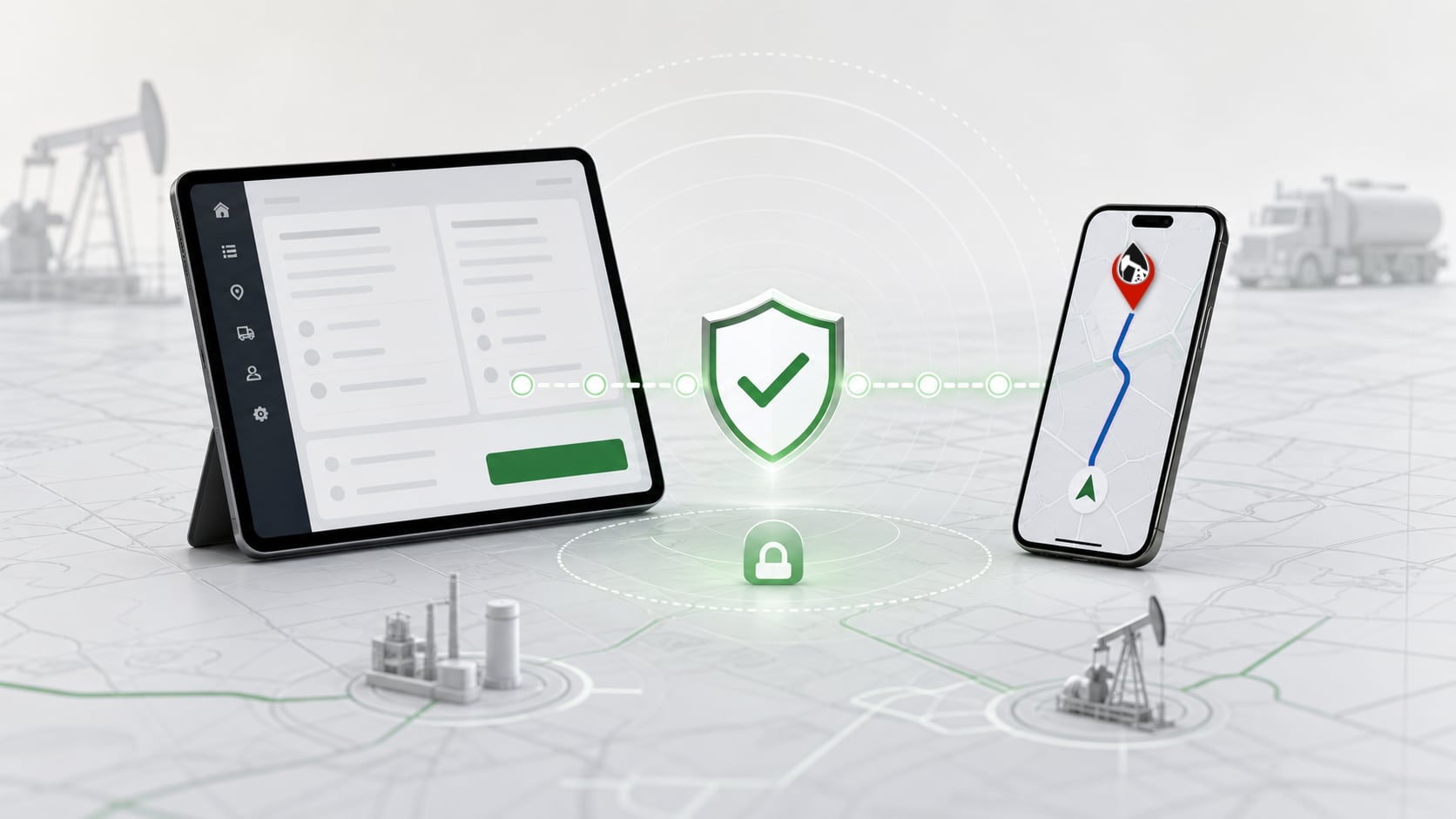
As part of our recent platform-wide updates, we’re excited to introduce a new feature called PartnerLink.
Over the years, we’ve spoken with many companies that use OilTrails alongside their own software. Some build dispatch systems. Others manage field tickets, customer portals, work orders, fleet operations, or internal tools. Despite serving different industries and workflows, the conversation was often the same:
“Can we send users directly into OilTrails without making them search for the location themselves?”
Until now, the answer was usually some variation of “sort of.”
PartnerLink changes that.
What Is PartnerLink?
At its core, PartnerLink is a way for other software platforms to send users directly into OilTrails with the exact location they need.
Instead of copying and pasting an LSD, re-entering GPS coordinates, or manually searching for a site, users can simply tap an Open in OilTrails button within a partner application.
OilTrails opens directly to the destination that was provided.
The result is a smoother transition between office planning and field execution. Dispatchers spend less time answering location questions, and field personnel spend less time typing and searching.
Built Around Real Oilfield Workflows
One of the challenges with oilfield navigation is that locations rarely arrive in a consistent format.
Sometimes it’s a GPS coordinate.
Sometimes it’s an LSD.
Sometimes it’s an NTS reference, a UWI, a battery name, an address, or simply a location description from a ticketing system.
PartnerLink was designed around this reality.
Partners can send whatever location information they already have available, including:
- GPS coordinates
- LSD locations
- NTS references
- UWI information
- Site names
- Addresses
- Ticket references
- Custom location descriptions
OilTrails then takes that information and handles the search, mapping, navigation, weather, and location context.
This flexibility allows companies to integrate OilTrails into existing workflows without changing how they already manage location data.
More Than Just Navigation
While navigation is often the first thing people think about, PartnerLink is really about delivering location context.
When a location is opened through PartnerLink, users can benefit from many of the same tools that make OilTrails valuable in the first place.
Depending on the location and available data, this may include:
- Turn-by-turn navigation
- Lease-specific weather
- Well data
- Satellite imagery
- Route planning
- Location intelligence and mapping tools
The partner application remains responsible for the business workflow, while OilTrails provides the field navigation experience.
No Subscription Required
One of the design goals behind PartnerLink was reducing friction.
If a company wants to send a user to a location, that process shouldn’t require creating new accounts, managing passwords, or purchasing subscriptions just to complete the task.
That’s why users do not need an OilTrails subscription to open a PartnerLink location.
They simply install OilTrails and follow the link provided by the partner platform.
This makes adoption easier for partners while ensuring users can get where they need to go without unnecessary barriers.
A Focused Experience
You may notice that when OilTrails is launched through PartnerLink, some features are limited.
This is intentional.
PartnerLink is designed around a specific destination and workflow. Instead of opening the entire OilTrails platform, users are taken directly to the information they need for that particular task.
For many organizations, this is actually a benefit. It reduces distractions, simplifies training, and keeps users focused on the location and job at hand.
Users who want the full OilTrails experience can still open the app normally and access all available features through a standard subscription.
Why We Built It
Over the past year, OilTrails has expanded well beyond its roots as a simple lease locator.
We’ve added route planning, route sharing, collections, GeoPics, weather tools, well data, bulk location processing, web-based planning, team management, and much more.
As OilTrails evolved, it became increasingly clear that many users weren’t starting their day inside OilTrails. They were starting inside other software systems and eventually ending up in OilTrails to complete the navigation portion of their workflow.
PartnerLink was built to bridge that gap.
It creates a clean handoff between the systems companies already use and the field navigation tools their users rely on every day.
Looking Ahead
We see PartnerLink as the beginning of a much larger story.
Today, it provides a simple and secure way for trusted partner systems to launch users directly into OilTrails.
Tomorrow, it opens the door to deeper collaboration between office planning systems and field operations.
As we continue expanding OilTrails across web, iOS, Android, and business workflows, PartnerLink will play an important role in helping those systems work together more effectively.
Interested in Becoming a Partner?
If your company develops software used by dispatchers, field operators, drivers, technicians, or oilfield crews, we’d love to hear from you.
PartnerLink makes it possible to bring OilTrails’ navigation, weather, mapping, and location intelligence directly into the workflows your users already know.
To learn more, visit our PartnerLink page or contact us to discuss your use case.
We’re excited to see what you’ll build with it.
—The OilTrails Team